Spinsy Registration & Account Guide for Australia
 Available in AU
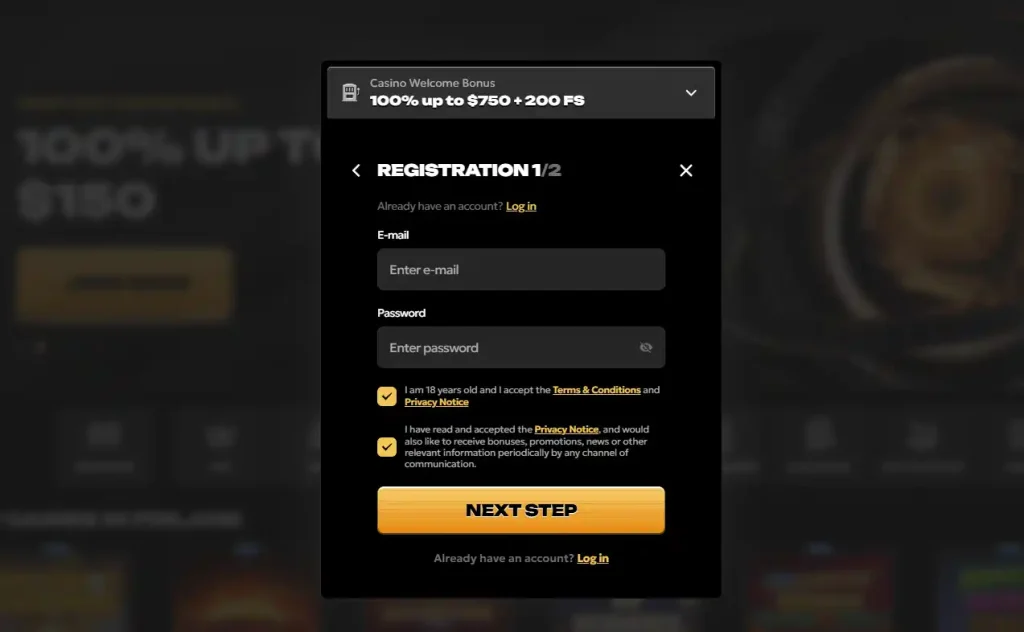
Spinsy maintains an English-language AU-localised site whose current public navigation shows both “Log in” and “Register” actions. Its terms require customers to be at least 18, and the operator can require identity, age, residence and source-of-funds verification. The current public pages do not show a complete static registration-form sequence, so no fixed field list is available.
Australian readers should also understand the regulatory position before treating a registration route as an endorsement. ACMA states that the Interactive Gambling Act prohibits providers from offering online casino-style services to people in Australia, and ACMA lists Spinsy among prohibited services investigated for an Australian-customer-linked prohibited interactive gambling service. An AU-facing register button therefore demonstrates a current interface path, not Australian regulatory authorisation.
Table of Contents
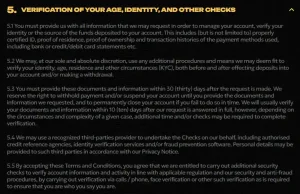
- Official references
- What the current terms say about Spinsy registration
- The Australian regulatory position comes before the sign-up steps
- Age is the first stated eligibility rule
- Use accurate account information rather than treating the form as disposable
- When KYC can enter the account lifecycle
- Login and account access: keep the guidance practical
- How registration connects to payments without duplicating the banking guide
- Support is part of the account journey
- What registration does not prove
- A practical account-evaluation checklist
- What the account journey means in practice
Official references
- Spinsy AU-facing site
- Spinsy General Terms and Conditions
- ACMA guidance on the Interactive Gambling Act
- ACMA investigations into online gambling providers
What the current terms say about Spinsy registration
The current AU-facing Spinsy page exposes “Log in” and “Register” in its main navigation. The terms say full website functionality requires a personal account, and they require the account to be opened under the customer’s own correct name with true and complete information. The same terms also require account details to be kept up to date.
The account journey can be described at a high level, but registration interfaces can change and the public pages do not expose every current input field, validation rule or screen in a stable form. Stable account rules should therefore be separated from the live form shown at the time.
| Account item | Current information | Variable or not publicly specified |
|---|---|---|
| AU-facing account path | The public AU interface shows Register and Log in. | The exact sequence of screens after opening the registration flow. |
| Minimum age | Customers must be at least 18. | No alternative lower age threshold is implied. |
| Account information | The terms require the customer’s own correct name and true, complete information. | A permanent list of every current form field or password rule. |
| KYC | Identity, age, residence and source-of-funds checks can be required. | Whether a particular account will be checked at a particular moment. |
| Support | Spinsy states that live chat and email are available 24/7. | No current public self-service recovery flow is shown. |
The Australian regulatory position comes before the sign-up steps
A registration guide can easily become promotional if it treats the existence of a form as proof that joining is straightforward or locally approved. That is not an appropriate interpretation here. ACMA’s public guidance says the Interactive Gambling Act makes it illegal for gambling providers to offer certain online services to people in Australia, including online casinos. Its investigations page also lists Spinsy in the prohibited-services context.
The practical distinction is between technical interface availability and regulatory status. An AU-localised webpage can show a Register action while the service is still subject to Australian enforcement. The site therefore does not use “join now” language, does not present registration as a recommendation, and does not imply that completing an account form gives access to Australian consumer-protection schemes.
The Australian regulatory position is covered on the dedicated Spinsy legitimacy in Australia page because it changes how account access should be interpreted.
Age is the first stated eligibility rule
Spinsy’s current terms state that customers must be at least 18 and must also have reached the legal age that applies to them. The AU-facing site repeats the over-18 requirement in its responsible-gambling footer. The 18+ minimum is stated directly by Spinsy rather than inferred from an industry norm.
Age should also be understood as a verification issue, not only a checkbox at registration. The operator’s KYC terms allow age to be checked alongside identity and residence. A person being able to open a registration interface does not mean every eligibility or verification question has already been resolved.
The public registration material does not specify a particular document-upload screen or automated database check. Those details can vary. The stable points are that 18+ applies and that age verification can form part of KYC.
Use accurate account information rather than treating the form as disposable
The official terms require a personal account to be registered in the customer’s own correct name. They also state that information supplied at registration must be true and complete and that account details should be kept updated. That makes accuracy part of the account rule, not merely a convenience for later verification.
From an account-lifecycle perspective, this matters because KYC can compare identity, residence and payment information with the details attached to the account. A mismatch can create extra work even if the initial registration screen was completed successfully. Accurate, consistent account details reduce the risk of mismatches during later KYC checks.
The terms also restrict duplicate-account behaviour. Exact sanctions and technical duplication criteria are governed by the current terms. The practical point is simpler: treat the account as a persistent personal record and keep the details accurate enough to withstand later verification.
When KYC can enter the account lifecycle
Spinsy’s terms allow KYC checks before and after deposits and around withdrawals. The KYC scope includes identity, age, residence and source of funds. That means verification is not necessarily a one-time stage immediately after registration. It can be triggered later when account or payment activity requires additional checks.
A reader may be able to create an account and navigate the site, yet a later deposit or withdrawal can still depend on verification. The account itself is therefore only one layer of access.
The dedicated Spinsy KYC page covers current document categories and verification timing. The account sequence is: registration creates the account, normal account use follows, and KYC can enter before or after financial activity depending on the checks required.
Login and account access: keep the guidance practical
The AU-facing interface currently provides a visible “Log in” action. That supports a straightforward statement that returning customers have a dedicated login route. It does not support inventing a password-recovery sequence, temporary-code process or reset email flow that is not shown on the current public pages.
If access fails, the published support routes are more reliable than a guessed recovery tutorial. Spinsy states that customer support is available 24/7 through live chat and email, and the official support email recorded in the terms is [email protected]. The public AU interface also links to a Help Centre.
Where a current self-service recovery flow is visible, it can be followed on the live service. Where no self-service flow is publicly shown, the exact recovery steps are not established; the published support routes remain the reliable option.
How registration connects to payments without duplicating the banking guide
Account creation and banking are related, but they answer different questions. Age, registration, access, KYC and support belong to the account layer. The separate Spinsy payment methods guide covers the payment brands and categories currently associated with the AU-facing service.
The connection between the two is KYC. Payment-method ownership and source-of-funds checks can become part of the account verification process. That is why a successful registration should not be interpreted as proof that every deposit or withdrawal option will be immediately available without further checks.
A specific Australian payment method should not be assumed to appear automatically after sign-up, and no fixed deposit amount forms part of account creation. Those are cashier-level facts, not registration facts.
Support is part of the account journey
Spinsy states that support is available 24/7 by live chat and email. The published support email is [email protected]. Those channels are relevant to account access, KYC questions and account administration, and they are more defensible than inventing a separate support page that repeats the same details.
The official terms also use customer support as a route for account closure. This reinforces the idea that support is an account-management channel, not only a place for game questions. Spinsy states that the support channels are available, but no universal response-time or resolution guarantee is stated.
For an account problem, use the visible login route, check the current Help Centre where relevant, and use Spinsy’s published live-chat or email support channels if the issue cannot be resolved from the current interface. Unofficial phone numbers, messaging accounts or recovery contacts should not be substituted.
What registration does not prove
Several conclusions should not be drawn from the existence of an AU registration path. It does not establish Australian regulatory authorisation. It does not place the account inside Australian dispute-resolution or customer-protection arrangements. And it does not mean that every product, provider, promotion or payment method will be available to every account.
For Australian users, registration involves four separate layers: the interface, account rules, KYC and regulation. The interface can be current and usable while the regulatory position remains separate and adverse.
- Register button
- Evidence of an account-creation route on the AU-facing interface.
- 18+ rule
- A minimum-age requirement stated in Spinsy’s terms.
- KYC capability
- Evidence that identity and financial-source checks can be required during the account lifecycle.
- ACMA listing
- Evidence that the service appears in Australia’s prohibited-service enforcement context.
A practical account-evaluation checklist
For readers assessing the account flow, the useful questions are not about how quickly to register. They are about whether the current interface, terms and protection environment are understood before any account action is taken.
- Interface: confirm that the current AU page still shows the expected Register and Log in routes.
- Age: the stated minimum is 18+.
- Details: use accurate personal information because the terms require correct, true and complete account data.
- Verification: expect that identity, age, residence or source-of-funds checks can be required later.
- Support: use the published live chat, email or Help Centre routes rather than unofficial recovery instructions.
- Regulation: do not interpret an AU-facing registration route as Australian regulatory authorisation.
A particular account can still encounter different verification or access requirements depending on its circumstances.
What the account journey means in practice
Spinsy’s AU-facing service currently exposes Register and Log in actions, applies an 18+ rule, and can require KYC during the account lifecycle. Spinsy states that support is available 24/7 through live chat and email. The practical account sequence is straightforward: treat registration as a personal-account process, use accurate information, expect verification to remain possible after sign-up, and rely on current support routes for access problems rather than guessed recovery steps.
For Australian readers, the account mechanics must remain separate from legal status. ACMA’s rules and investigation record mean the presence of a registration interface is not evidence of Australian approval or protection. For the full product-level overview, return to the Spinsy Australia review.