A practical look at game labels, payment checks, bonus terms, free play and the risks of real-money gambling in Australia.
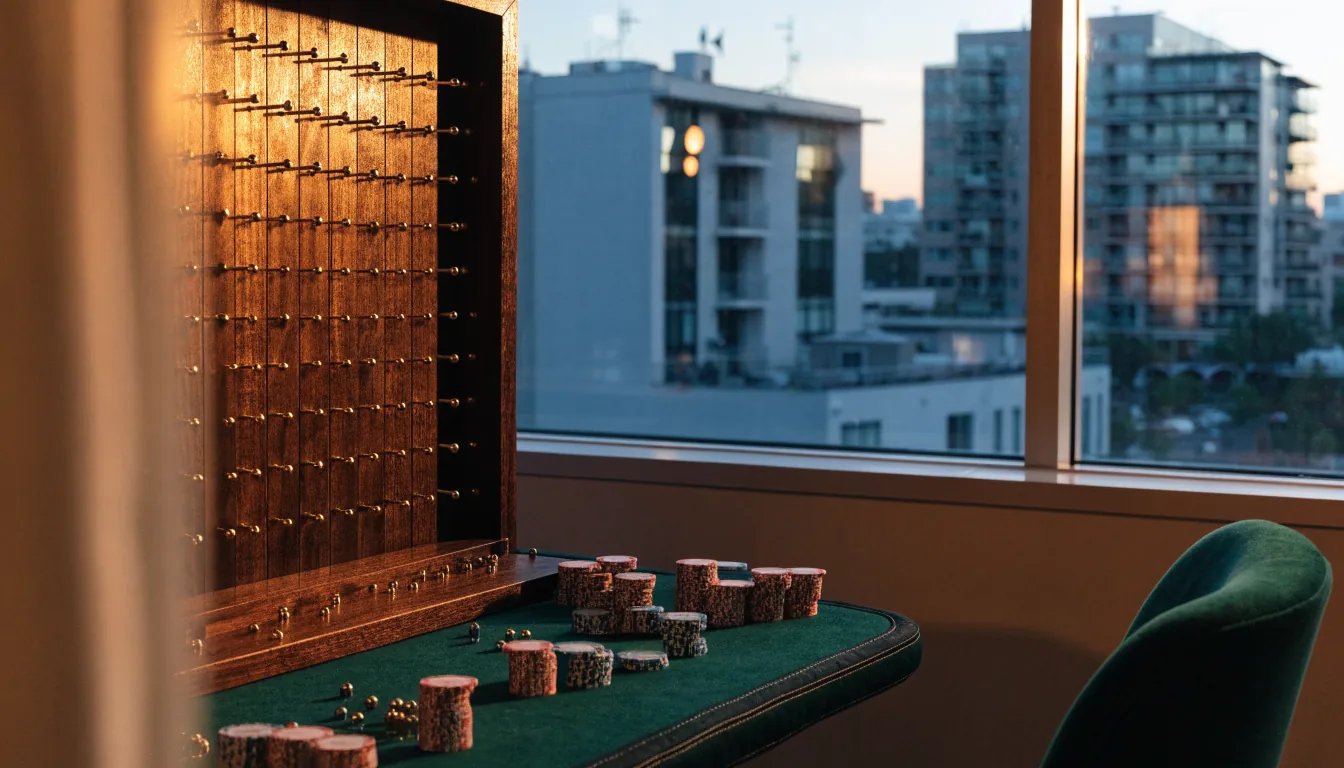
When a page calls something a Plinko slot, the word “slot” tells you how the listing is being categorised; it does not, by itself, establish who made the game, how it works, or whether the name refers to a distinct title. I treat the label as a starting point, not a specification. A heading can group together games with different software, presentation and rules.
That distinction matters because the Plinko name can appear alongside familiar slot wording: a machine, a game, a demo or a review. Those terms describe different things. “Slot machine” may be a broad category label on a casino-style site. “Demo” usually signals that a page is presenting a non-cash version, while “review” signals commentary about a title or listing. Neither word confirms the source of the software or the details of its operation.
Names such as Gods of Plinko or Plinko Rush may look like formal game titles, but a name alone is not proof of a developer or provider. The same applies to wording that joins Plinko with a site or brand name, such as Slot Temple. It may identify a page, a category or a product label. You need a clear provider attribution in the game information itself before treating it as a fact. A tidy logo and a confident title are not evidence.
If you’re looking for a Plinko casino in Australia in 2026, check the available operator details before choosing where to play. This list gives you a concise reference point for each operator.
Golden Pokies
Golden Pokies lists a Curacao license. That is the stated licensing detail to consider when assessing it.
Kingmaker
Kingmaker lists a minimum deposit of A$30. Its stated payout times are around 90 minutes for crypto and 1–5 days for fiat.
SpinsUp
SpinsUp lists a Curacao Gaming Control Board license, OGL/2023/174/0082, held by Dama N.V.
Playfina Casino
Playfina Casino lists a Curacao eGaming license held by Hollycorn N.V., which dates back to 2017. Its minimum deposit is A$20–30, depending on the offer.
SkyCrown
SkyCrown lists a Tobique Gaming Commission license and a minimum deposit of A$30. Its stated payout times are around 10–15 minutes for crypto and 1–5 days for fiat.
Uptown Pokies
Uptown Pokies lists a Curacao license and has been operating since 2017. Its minimum deposit is A$20.
LuckyVibe
LuckyVibe lists a Curacao Gaming Control Board license, OGL/2023/176/0095, held by Hollycorn N.V.
WinSpirit Casino
WinSpirit Casino lists a Curacao eGaming license, OGL/2024/923/0383, held by Antillephone N.V. Its minimum deposit is A$30.
Thor Casino
Thor Casino lists a Curacao license through Antillephone N.V. (Versus Odds B.V.). Its minimum deposit is EUR 20.
Roby Casino
Roby Casino lists a Curacao eGaming license held by Roby Games Ltd.
In ordinary use, a slot is a type of casino game presented through a digital or physical machine format. But putting “slot” beside “Plinko” does not settle whether a particular listing is technically a slot, a branded variation, or a different casino game filed under that category. The label may be there to help people find a product, rather than to give a precise account of its software.
The practical point is to separate three things that are often bundled together: the title shown on the page, the provider named for the software, and the category assigned by the site. They can match, but they do not have to. A Plinko-branded page might describe a game in slot terms without proving that a particular established slot studio built it. Nor should you assume that every title using Plinko has the same provider, design or published return.
This is why I would not read “top slot” as a technical rating. It is a promotional-sounding phrase, not a measurable feature. Without a stated method behind the ranking, it says little about quality, fairness or suitability. The same caution applies to “best” and similar labels: they are opinions unless the page explains what is being compared and on what basis.
Return to player, or RTP, is a percentage associated with a game’s theoretical return over a long period of play. It is not a promise about what one person will receive, and it does not identify the provider. A number is useful only when the game and the source of that number are clear.
For KA Gaming slots, RTP percentages typically fall between 94% and 96%. That range applies to KA Gaming slot titles as a group; it does not establish that a Plinko-named game belongs to KA Gaming. If a listing gives an RTP, check whether it names the provider and the specific title the figure describes. If those details are missing, avoid carrying the percentage over to a different game just because both pages use the word “slot.”
A published RTP also needs to be read as a property of the specified game version, not as a forecast for an individual session. It cannot tell you whether a particular play will win, or make a casino game a source of income. The distinction is plain, but easy to lose when a page places a large percentage beside a bright title.
If you are assessing a Plinko-branded slot listing, look for the exact title, the named software provider and a game-information panel that ties any technical details to that title. If the page uses several names interchangeably, or attaches a provider’s RTP range without showing that the provider made the game, treat the attribution as uncertain. Do not fill in the gaps yourself.
“Plinko slots” can therefore mean a group of listings presented as slots, rather than one standard product with one maker. A Plinko slot machine may be a loose label for a digital game, not evidence of a physical machine or a shared design across titles. And a Plinko slots review is a reviewer’s account, not certification of the listing. The label is only one clue. The details matter more.
This distinction is informational, not an invitation to play. Real-money online casino games are prohibited for operators to provide to people in Australia, and slot-style games fall within that category. Gambling is for adults aged 18 or older, and it can cause serious harm. No label changes that.
A page can use “Plinko” in its name and describe itself as an online casino without establishing what service it actually provides. The label might refer to a game, a category, or simply the branding on the page. I would treat those as separate claims: what the site says it offers, whether the page is accessible from Australia, and what its cashier information says. None of those details should be inferred from the name alone.
That distinction matters with names such as Golden Plinko, too. A branded page is not proof that a particular casino exists, that it offers a specific game, or that its claims have been independently checked. The same goes for a site advertising live Plinko or an online casino with Plinko: those phrases describe what the page wants you to expect, not verified features. I would look for clear, consistent information on the page rather than taking a headline as evidence.
A page loading on your device does not mean its service is authorised for people in Australia. The Interactive Gambling Act 2001 restricts operators from providing real-money online casino services to people here. An offshore site may still be visible or accept Australian payments; neither fact turns it into a locally approved casino. Australia’s restrictions apply to the service, not just to the wording in its advertising.
That is worth keeping in mind if a page says it is “available” to Australians. Availability can mean only that the website opens, or that its form accepts details from this country. It does not settle whether the underlying service may lawfully be offered here. Nor should a polished interface or familiar local payment wording be mistaken for evidence of local oversight.
I would also be cautious about claims that access is uninterrupted. Websites can become unavailable, including when access is blocked. A link working one day is not a dependable promise about what will happen later. If a page asks you to install something, use a workaround, or send personal details before explaining who operates it, stop and consider what information you are being asked to hand over. No game label makes that a small decision.
A row of payment logos tells you little on its own. The useful detail is the written cashier policy: which methods it says are supported, what currency it uses, whether it lists fees, and what conditions apply to deposits and withdrawals. If those details are vague, scattered, or inconsistent between the cashier page and the terms, you cannot confidently work out what a transaction would involve.
This is not an endorsement or a recommendation to deposit. It is a way to recognise what a page is and is not telling you. A payment method appearing on a page does not prove that a payment will be accepted, that money will be returned on request, or that the operator is accountable in Australia. Avoid treating a logo, a “secure payments” badge, or a short claim about speed as a substitute for readable conditions.
The same applies to wording about real-money play. “Plinko pokies” or “casino game online” may sound straightforward, but the page should make clear what is actually being described. If it is unclear whether a link leads to a demo, a real-money service, or another page entirely, do not assume. The distinction matters, and vague copy does not resolve it.
Before relying on anything a Plinko-branded page says, I would check whether the following information is easy to find and agrees across the site:
A missing detail is a reason not to rely on the claim, not an invitation to fill the gap with a guess. If the operator is hard to identify, terms are difficult to locate, or the cashier description does not match the general terms, the page has not given you a sound basis for trusting its presentation. Keep your personal and payment details to yourself unless you understand who is collecting them and why.
People often want a simple answer to which online casino has Plinko. In Australia, though, a list of names would risk making prohibited real-money services sound like options to choose from. I can’t present one as a recommended destination. The safer reading is more limited: a Plinko label is a claim to scrutinise, not proof of a suitable or lawful service. A page’s branding can be very confident. The details should be clearer.
A Plinko-branded page may describe play as real-money gambling, but that label tells you little about what happens when you try to withdraw. The amount you can request, the documents you may need and the site’s review process matter more than a game title. If you are already dealing with a balance, check the withdrawal terms before making assumptions about when it can be paid.
Offshore sites commonly set a minimum withdrawal threshold between A$75 and A$150. That is the minimum balance for a withdrawal request, not a promise that a payment will be approved or arrive immediately. If your balance is below the stated threshold, you may not be able to submit a request yet. Check whether the figure is shown in Australian dollars and whether the cashier describes it as a minimum per withdrawal or a minimum balance; those details affect what the number means.
The first withdrawal commonly triggers KYC, short for “know your customer”. A site may ask you to provide identity documents, such as a passport or driver’s licence, along with a utility bill. These checks are used to confirm who is requesting the funds. They can be an unwelcome surprise if you have only looked at the game screen and not the account requirements.
Read the document instructions carefully before sending anything. Check which documents are requested and how the site wants them submitted. Don’t send identity paperwork through an unrelated contact channel. If the instructions are unclear, pause and seek clarification through the site’s stated support route rather than guessing.
First Withdrawal
Check thresholds
Verify if your balance meets the minimum withdrawal threshold, often between A$75 and A$150.
Prepare KYC documents
Gather required identity paperwork, such as a passport, driver’s licence, and a utility bill.
Submit via official channels
Send the documents only through the site's stated support route or secure upload system.
A request for documents does not, by itself, tell you how long the process will take. Nor does a displayed balance mean that funds are ready to transfer: a withdrawal request and its review are separate steps. Keep a record of what you submitted and any confirmation you received. If a request is delayed, use that record when asking for an explanation. A clear paper trail helps.
The minimum withdrawal figure is easy to misread when you are focused on a balance. Suppose a site lists a minimum in the A$75–A$150 range: that tells you the smallest request it may accept under its stated terms. It does not establish a processing deadline, settle a disputed request or confirm that every account can withdraw the same way. Read the conditions attached to your own account, rather than relying on a figure repeated elsewhere.
This matters when a page uses broad phrases such as “quick cashout” or “easy withdrawal”. Those are not substitutes for the actual threshold and identity-check requirements. Look for the amount in the cashier’s terms and check whether the site explains its KYC process. If the relevant conditions are hard to find before you create an account or deposit, that is a reason to slow down, not to infer the missing details.
The same caution applies if a Plinko page is presented as an app or downloadable game. A game label or interface does not explain who handles a withdrawal or what identity documents will be required. Treat the payment terms as a separate part of the service. A familiar-looking game screen is no guarantee of a straightforward cashout.
For anyone searching for a Plinko game with real-money withdrawals, the practical point is simple: know the minimum and the document requirements before money is involved. A first cashout can require more than tapping a button. If gambling is causing financial or personal harm, stop and seek support; gambling can cause serious harm, particularly for vulnerable people. Keep gambling restricted to people aged eighteen or older.
A Plinko-branded casino game and a progressive jackpot describe different things. The first label identifies a game or game theme; “progressive” describes how a jackpot can build as people play linked pokies. They should not be treated as interchangeable, and jackpot rules for pokies do not tell you anything about a particular Plinko game.
That distinction matters when a game page uses broad casino language. A title may be presented as a casino game without having a progressive jackpot at all. Conversely, a pokie can offer a progressive prize because it is connected to other machines or to a wider network. The label alone does not tell you how a game pays, whether a jackpot is attached, or who qualifies for it. Those details belong to the individual game’s rules.
A standalone progressive jackpot is tied to a local machine or set-up. Its value grows through play associated with that local arrangement. A networked progressive links many machines, or can span an online operator’s fleet, so contributions from play across the network feed the prize. In either case, the key idea is that the jackpot can increase as linked play takes place.
A prize tied to a local machine or set-up, growing through play associated with that local arrangement.
A prize that links many machines or an operator's fleet, fed by contributions from play across the network.
The difference is the reach of the link. With a standalone jackpot, the relevant pool is local. With a networked one, the pool connects a broader group of machines. That does not, by itself, tell you how likely a win is or what a player will receive. It tells you where the jackpot is built, not the odds of hitting it.
This is useful context if you have seen a large jackpot figure beside a pokie and assumed every game in the same casino category works the same way. It does not. A progressive feature is a particular prize structure, not a general property of casino games. Plinko searches may bring up unrelated game formats and promotions side by side, but that does not make their rules transferable. Different label. Different rules.
A jackpot headline is only part of the picture. Before treating a prize as available, check the game’s own conditions, especially the contribution rate and the minimum bet needed to qualify. A specialist review has noted that these requirements can matter to eligibility; the exact terms need to be checked for the specific game rather than assumed from another title.
Some games set a qualifying minimum bet. A$1.00 is one example, not a universal threshold. If a player stakes below a game’s stated minimum, the bet may not qualify for the progressive jackpot even if it is otherwise a valid wager. The contribution rate also matters: it indicates how play feeds the jackpot, but it should not be confused with the chance of winning it.
I would read those conditions before giving any headline figure much weight. Look for whether the jackpot is standalone or networked, what bet qualifies, and how contributions are described. If those points are unclear, the headline alone cannot settle them.
None of this establishes that a Plinko-branded game has a progressive prize, or that rules from a pokie apply to it. The term “casino game” covers different formats, while a progressive jackpot is a specific feature with its own eligibility terms. Keep those categories separate, and read each game’s information on its own terms.
A polished review can make a game sound settled: good value, simple to use, worth your time. Treat those as opinions until the page shows what they refer to. Is the writer discussing a particular Plinko-branded title, a casino site, or a free-play version? Those are different things, and praise for one does not establish anything about the others.
I look for details a reader could actually check: the game’s exact name, who supplies it, and whether the review explains where its information came from. A headline about a Plinko Rush title, for instance, is not enough to show that the page covers the same game you have in mind. Nor does a familiar name in a title prove a connection to a celebrity or a casino operator. Names can attract clicks; they are not evidence.
RTP figures need the same care. KA Gaming slot RTP percentages typically fall between 94% and 96%. That range describes KA Gaming slots, not every Plinko-labelled game, and it does not tell you the RTP of an unnamed title. If a review gives a number, check that it identifies the game and provider it applies to. If it does not, the figure is just decoration. Even a properly attributed RTP is a theoretical game statistic, not a promise about an individual result.
Watch for the difference between a review and an offer. A review describes or evaluates something; a free-play page invites you to try a mode or promotion. A button promising free play does not verify the review’s claims, and a review is not itself proof that a free version exists or works as described. Keep the two separate rather than letting a review’s confident tone stand in for evidence.
The same goes for labels such as “deluxe,” “verde,” or “casino.” They may be part of a product or site name, but they do not establish who runs it, what game is available, or whether its claims are accurate. I would rather see a plainly stated limitation than a string of glowing adjectives.
A useful review leaves room for you to judge. It names what it assessed, separates fact from opinion, and makes clear when a claim applies only to one title. If it slides between a game, a site and an offer without saying so, slow down. That is not a small distinction.
A Plinko label does not change the rules that apply in Australia. Under the Interactive Gambling Act 2001, operators cannot provide real-money online casino games to people physically located here. That covers casino-style games such as slots, poker and table games, whether a site describes itself as a Plinko casino or uses another name. Advertising those services to Australian audiences is also prohibited.
The law is aimed at operators, not at individual players: Australians are not criminalised simply for using an offshore site. That does not make the service lawful to offer here, or mean that a site is authorised to operate in Australia. Offshore licensing does not override the Australian restrictions.
The federal regulator is the Australian Communications and Media Authority, or ACMA. It monitors compliance with federal interactive gambling laws and enforces the Act. When a website provides prohibited gambling services or advertises them in Australia, ACMA can ask internet service providers to block access. A page loading today is no guarantee that it will remain reachable.
ACMA says enforcement actions have led to more than 1,455 illegal gambling and affiliate websites being blocked since November 2019. The reported count of services that have left the Australian market since enforcement began in 2017 is less consistent: one figure is more than 210, while another is over 190. Either way, the figures describe enforcement against services, not a list of sites that Australians can safely use.
That distinction matters when a Plinko-branded page appears in front of you. Search results, a working link or a polished website do not establish that an operator may legally offer real-money casino games in Australia. Nor does a foreign licence make the Australian prohibition disappear. Access may be restricted following an ACMA action, and an operator’s online claims are not a substitute for the law.
So read the Australian context plainly: real-money online casino services are prohibited for operators to provide here, and ACMA has powers to act against prohibited services and their advertising. Players themselves are not criminally liable for using offshore sites, but that is not an endorsement or a recommendation to do so. The legal risk sits with the operator; the practical consequences of access and service changes can still affect users.
Legal Prohibition
Under the Interactive Gambling Act 2001, operators are prohibited from providing real-money online casino games to people physically located in Australia.
A free-play label points to a different intention from depositing money or trying to cash out. You may simply want to see how a Plinko-style game is presented, or whether a slot has a no-cost mode. That distinction matters: a screen that lets you play without paying does not, by itself, tell you anything about the game’s quality, the operator behind it, or what happens if you move to a paid version.
I would treat “free” as a description to verify, not a promise. Check whether the mode uses play credits with no cash value, whether it asks for an account, and whether any step leads into a deposit prompt. Those are practical questions, not proof that a particular Plinko game or free slot mode is available. The same goes for free spins: the phrase alone does not establish what is offered or what conditions apply.
A name such as Pond of Plinko may catch your eye, but a title is not evidence that a playable free version exists. Nor does a page calling itself one of the best places to play establish that it is safe or suitable. Don’t hand over personal or payment details just to find out whether a free mode works.
Keep the boundary clear. Free practice is not a way to test your chances of making money, and it should not be treated as a preview that guarantees the paid experience will behave the same way. If you are under 18, gambling is not for you. For adults, remember that problem gambling can cause serious harm, particularly for vulnerable people; stop if play begins to affect your finances, mood or daily life.
A free mode can be a way to inspect a game without staking money, if one is genuinely available. It cannot settle the more important questions about a real-money service. Free means no stake only when the terms and the actual play confirm it.
When a Plinko-branded casino page mentions cryptocurrency, separate the payment method from the game label. A crypto option does not, by itself, tell you who operates the site, what game is being offered or what you will receive if you withdraw. Those details need to be considered independently.
A specialist review reports that crypto withdrawals can clear faster than other methods. The trade-off is that network fees and the spread applied when converting between currencies may reduce the amount that reaches your wallet. The displayed withdrawal figure and the final value received are not necessarily the same. Check which currency the site uses for the balance, what currency is sent, and whether fees or conversion costs are deducted before or after processing. A quick transfer is less useful if the net amount comes as a surprise.
Keep the word “Plinko” out of assumptions about the payment itself. It describes the page’s game branding, not the crypto network or the conditions attached to a transfer. If a cashier gives vague answers about fees or conversion, treat that as a reason to pause rather than filling in the blanks yourself.
The phrase “Plinko casino script” is a different matter. It may point to an interest in software used to build or present a Plinko-style casino page, but the phrase alone does not identify a particular script, its maker, its capabilities or its safety. A product name or promotional description is not proof of what the software does. Look for clear information about the seller, the software’s documented functions and the terms attached to its use before relying on any claim.
Network fees and the spread applied during currency conversion may reduce the final amount that reaches your wallet, meaning the displayed withdrawal figure and the received value may differ.
I would keep these two topics separate: crypto concerns the movement and conversion of funds; a script concerns software. Neither label verifies the other. Don’t let a familiar game name make an unclear payment or product description seem more trustworthy.
A bonus is not cash sitting in your balance. It is conditional credit, and any winnings tied to it may remain unavailable until the stated wagering requirement is met. A “no-deposit” label does not change that: read the conditions attached to the offer, including what counts as a qualifying bet and which games contribute.
The arithmetic matters. A specialist review gives this example: a $100 bonus with a 40x wagering requirement calls for $4,000 in bets before bonus-derived winnings can be withdrawn. That is the turnover required, not a promise that you will win or get the bonus amount back. If the terms are unclear about whether the requirement applies to the bonus, winnings, or both, do not guess.
Game contribution can change the calculation too. A specialist review reports that blackjack may count for only 10% of wagering. On that basis, a bet may advance the requirement much less than its face value suggests. The operator’s own terms are the place to confirm the applicable contribution; a figure described elsewhere is not a universal rule.
This is worth checking when a page uses Plinko branding, whether it describes a no-deposit offer, a casino bonus, or a named game such as Gods of Plinko. A Netherlands-facing label does not establish that the terms apply to Australian readers. The headline is the easy bit. The conditions do the work.
Before accepting any offer, check the expiry conditions, eligible games, contribution rates, and what happens to bonus funds if you withdraw or opt out. Keep the bonus balance separate in your head from money you can actually take out. If the offer makes the wagering calculation hard to find, that is a reason to pause, not a puzzle to solve after depositing.
Bonus terms are not a reason to gamble more. Gambling can cause serious harm, particularly for vulnerable people. Only people aged 18 or older should gamble; if the conditions do not suit you, leave the offer alone.
A search for a UK-based Plinko casino, a Lucky-branded game or a Casino Guru review may point you towards different kinds of pages. It does not change the Australian context: poker-machine losses here show why gambling should not be treated as a way to make money.
A report by gamble.com.au put Victorian poker-machine losses at $2.6 billion over the year it covered, more than $44.7 million above the 2015 figure. It also reported that the Epping Plaza Hotel in Melbourne’s north took more than $21 million from 100 machines over the last year. Those figures describe losses by players and venue revenue, not an income opportunity for anyone sitting at a machine.
The totals are stark, but the local example makes the scale easier to picture: a single venue, a fixed group of machines, and millions of dollars lost by players. That is a reminder to set a firm limit before gambling, and to stop when you reach it. Chasing losses can deepen the harm; it cannot turn past losses into a reliable route to a win. Problem gambling can cause serious harm, particularly to vulnerable people.
The same report described a reform proposal from Senator Nick Xenophon and MP Andrew Wilkie: a $1 bet limit on poker machines. A proposal is not the same as a rule in force, but it signals the kind of debate that follows when losses reach this scale.
If you are 18 or older and choose to gamble, treat any spend as money you may lose, not as a plan for bills or savings. Keep the boundary clear. No income strategy.