A practical guide to Bitcoin and PayID payments, site checks, withdrawals and the limits of offshore licensing for Australian players.

“Safe” can mean several different things when people talk about online pokies: that a website protects account information, that payments work as expected, or that a player has legal and practical protections if a dispute arises. Those are not the same claim. In Australia, the legal position sets an important limit on what the word can reasonably promise.
Australian law prohibits locally licensed online casinos from offering real-money pokies to people in Australia. The offshore operators considered in this context hold licences from overseas authorities, primarily Curacao eGaming or the Anjouan Gaming Authority. An offshore licence is not an Australian licence, and it does not make the operator subject to Australia’s consumer protection laws.
That distinction is easy to miss. A licence issued overseas may indicate that an operator has a relationship with the authority named on its site, but it does not give Australian players the protections they might expect from a locally regulated business. If a disagreement arises over an account or a payment, Australian consumer protection laws do not apply to these offshore operators. A foreign licence should not be read as a local endorsement or a guarantee that an Australian body can resolve a complaint.
Choosing an online pokies site means weighing the details that matter to you, including licensing and payment information. Use these entries as a starting point, and check the terms that apply to you before signing up.
Golden Pokies
Golden Pokies lists a Curacao license. That licensing detail is the available point to consider when assessing the operator.
Kingmaker
Kingmaker lists crypto payouts at around 90 minutes and fiat payouts at 1–5 days. Its minimum deposit is A$30.
SpinsUp
SpinsUp lists a Curacao Gaming Control Board license, OGL/2023/174/0082, held by Dama N.V. This gives you a specific licensing detail to check.
Playfina Casino
Playfina Casino lists a Curacao eGaming license held by Hollycorn N.V., with the operator dating back to 2017. Its minimum deposit is A$20–30, depending on the offer.
SkyCrown
SkyCrown lists a Tobique Gaming Commission license. Its stated payout times are around 10–15 minutes for crypto and 1–5 days for fiat; the minimum deposit is A$30.
Uptown Pokies
Uptown Pokies lists a Curacao license and says it has operated since 2017. Its minimum deposit is A$20.
LuckyVibe
LuckyVibe lists a Curacao Gaming Control Board license, OGL/2023/176/0095, held by Hollycorn N.V. This is the available licensing detail for you to review.
WinSpirit Casino
WinSpirit Casino lists a Curacao eGaming license, OGL/2024/923/0383, held by Antillephone N.V. Its minimum deposit is A$30.
Thor Casino
Thor Casino lists a Curacao license associated with Antillephone N.V. and Versus Odds B.V. Its minimum deposit is EUR 20.
Roby Casino
Roby Casino lists a Curacao eGaming license held by Roby Games Ltd. The license information is the available detail to consider.
When you see “safe online pokies Australia” used as a broad promise, pause over what is actually being claimed. The phrase might refer to website security, a particular payment method, fair treatment, or legal protection. Evidence for one does not establish the others. A secure connection, for instance, would not change the operator’s offshore status; likewise, an overseas licence does not itself settle what happens if you and the operator disagree.
I would keep the questions separate. Is the operator licensed overseas? Is it offering a service that is lawful for Australian operators to provide to residents? What recourse would you have if something went wrong? The answers are different, and “safe” blurs them together if it is left unexplained.
Describing an offshore licence or explaining the limits of Australian consumer protections does not turn the service into a locally regulated one. Nor does it mean that a player has the same practical protections they would have when dealing with an Australian business. The gap matters before any judgement about a site’s other features.
An offshore licence identifies the authority under which an operator says it is licensed. It does not mean the operator holds a licence to offer real-money pokies under Australian law. The operators in this offshore category hold licences primarily from Curacao eGaming or the Anjouan Gaming Authority; those are overseas authorities, not Australian regulators.
 Same-Day Casino Payouts in Australia: What to KnowLearn how operator approval differs from payment processing, why first withdrawals may need identity checks, and what to verify before relying on…
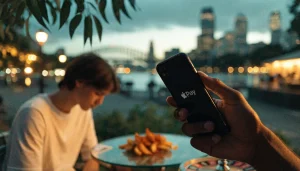 Casinos That Accept Apple Pay in Australia: What to KnowLearn what an Apple Pay option does and doesn’t establish, including the rule that operators cannot offer real-money online casino games to…
So, when you encounter the word “licensed”, check what it refers to in the sentence around it. “Licensed” without a jurisdiction can sound more reassuring than it is. The relevant distinction is not simply licensed versus unlicensed; it is whether the licence is Australian or offshore, and whether Australian consumer protection laws apply. Here, those laws do not apply to the offshore operators.
That does not tell you that every operator will behave in the same way, or that a particular dispute will occur. It does tell you not to treat an overseas licence as a substitute for Australian consumer protections. Legal status and a site’s conduct are separate matters. Keep them separate.
For Australian players, “safe pokies” is not a dependable shorthand for “protected under Australian law”. Real-money online casinos cannot be locally licensed to offer pokies to residents, while offshore operators sit outside Australian consumer protection laws. That is the central limit behind any safety claim about these services.
If a site presents its foreign licence as proof that Australian players are protected, read that claim carefully: the licence is offshore, and Australian consumer protections do not apply to the operator. If a site uses “safe” without saying whether it means security, payments, legal status or complaint handling, the word alone tells you very little.
I would not collapse those questions into a single yes or no. The law draws a clear boundary around locally licensed operators and real-money pokies; an offshore licence does not move that boundary. It is a distinction worth keeping in view, not a reason to mistake legal context for an invitation.
Bitcoin pokies are digital slot-machine games that accept Bitcoin as a payment method. The game itself is still played on a screen; Bitcoin is the cryptocurrency involved in paying an operator. That distinction helps keep the basics clear: the game and the payment method are related, but they are not the same thing.
For someone who has not used cryptocurrency before, the first step described for this payment route is acquiring Bitcoin. Cryptocurrency exchanges allow customers to buy it using conventional currency. The exchange will guide you through its own account-opening process. This can involve supplying basic information and creating a password. The exact steps depend on the exchange, so read its instructions rather than assuming that every service works identically.
Treat that password as a key to your exchange account. Choose one that is hard to guess and do not reuse a password you rely on elsewhere. Take time to understand the exchange’s sign-in and account-security options before putting money into an account. A tidy start is better than trying to sort out access after you have already made a purchase.
Once you understand how the exchange account works, pause before moving on to any gambling-related account. Buying Bitcoin does not itself make a gambling service lawful, safe or suitable. Nor does the use of cryptocurrency tell you who operates a site or what protections you would have if something went wrong. The payment method is only one part of the picture.
There is a particular Australian context here. Real-money online casino games are prohibited services when offered to people in Australia, and operators discussed in this market are offshore rather than locally licensed. Australian consumer protection laws do not apply to those offshore operators. If you are under 18, do not use real-money gambling services.
It is also worth separating “using Bitcoin” from “being anonymous” or “being protected.” A cryptocurrency payment does not establish that an operator is trustworthy, and it does not remove the need to think carefully about where your money is going. Those are separate questions from how a person buys Bitcoin or creates an exchange account.
If you are simply learning the terminology, keep the process in this order: understand what Bitcoin is, learn how the exchange account is set up, and decide whether you want to proceed at all. Do not create an account with a gambling operator just because you have acquired cryptocurrency. You can stop at the learning stage; purchasing Bitcoin does not oblige you to use it for gambling.
The phrase “safe Australian pokies” can blur two different issues. One is whether an account or payment process is handled carefully. The other is whether a real-money casino service is authorised to operate for customers in Australia. A password and a cryptocurrency balance address neither question on their own. Likewise, having an account at an exchange does not amount to approval of any separate service that may accept Bitcoin.
Acquiring Bitcoin
Choose an exchange
Select a cryptocurrency exchange to buy Bitcoin using conventional currency.
Open an account
Complete the exchange's account-opening process by supplying basic information and creating a password.
Secure the account
Set a hard-to-guess password that you do not reuse elsewhere and understand the security options before depositing funds.
If you encounter a site describing itself as a safe online pokies casino, read that as a claim that needs scrutiny, not as proof. A polished account page or a Bitcoin option says little by itself about the operator’s conduct. Avoid treating ease of account creation as a safety check. When money is involved, a quick sign-up is not the same as informed consent.
This page is affiliate material and may include sponsored links. That disclosure does not change the legal context or amount to an endorsement. Use the information to understand the terms, not as a reason to open an account. Bitcoin pokies Australia is a phrase people use for this combination of game and payment method; it should not be mistaken for a locally regulated category of casino service.
The practical starting point, if you are learning about Bitcoin rather than being urged to gamble, is modest: understand how an exchange asks you to register, provide the requested basic information, and set a strong password. Then take a breath. The next decision is yours, and nothing about owning Bitcoin requires you to take it.
If you are weighing PayID against another way to pay for online pokies, keep the question precise: does a particular operator accept it, and what can you establish about the payment arrangement? A payment name on a page is not, by itself, proof that the method is available to you or that using it makes the gambling service safe.
That does not establish anything about PayID. It would be a stretch to turn Bitcoin’s payment steps or characteristics into a safety verdict about a different method. I would not treat “PayID pokies” as confirmation that PayID is supported, nor as a reason to trust the site.
That distinction matters because “safe” can mean several different things. You might mean that a payment reaches the account you intended, that your personal information is handled properly, or that an operator will honour a withdrawal. Those are separate questions. A payment option’s name cannot settle all of them, and a site’s mention of a method does not answer how an individual transaction would be handled.
If an operator claims to accept PayID, read the claim as something to check, not as a safety badge. Look for whether the payment instructions are clear and consistent with what you are being asked to do. If you cannot tell who receives a payment, what details you must use, or how the operator says it will recognise the transaction, pause rather than guess. Do not fill in gaps with assumptions based on another payment method.
I would also separate payment claims from claims about the operator. Even a payment process that appears straightforward would not prove that an offshore gambling business is trustworthy or that it will resolve a dispute fairly. The operators discussed in this market are offshore, and Australian consumer protection laws do not apply to them. A polished payment page does not change that. This is context, not a recommendation to play.
There is a further reason not to read too much into a payment label: an operator’s description and your own payment records are different things. Keep the wording on the page distinct from what you actually send or authorise. If the details do not match, or the instructions change unexpectedly, do not proceed on the assumption that the difference is harmless. Take time to understand the request first.
For a practical check, ask yourself what exactly you can confirm before taking any action: whether PayID is explicitly offered by that operator, whether the instructions identify the intended recipient, and whether the operator explains how it handles payment questions. These checks do not certify safety; they simply help you spot uncertainty before money is involved. Avoid treating a favourable review or a reassuring phrase as a substitute for clear transaction instructions.
Nor would I say that PayID is unsafe. The honest distinction is narrower: Bitcoin’s described steps are not evidence about PayID, and a site’s payment claims should not be mistaken for proof of its wider reliability.
If you are under eighteen, do not use real-money gambling services. This article is affiliate material and may include sponsored links; that commercial relationship is not an endorsement of any operator or payment method. Keep the question modest: what does the operator actually say about PayID, and what can you independently confirm before acting? If the answer remains unclear, leaving it there is better than treating an assumption as assurance.
A review, a licence claim and a broad game catalogue can tell you different things. None, by itself, establishes that an offshore site is safe for someone in Australia. I treat them as information to examine, not as a checklist that turns a risky choice into a sound one.
Start with the reviews. Look for specific, consistent accounts of how the site handles ordinary customer issues, rather than praise that could fit any operator. Pay attention to whether a review explains what it checked and distinguishes observed details from opinion. A specialist review recommends considering positive reviews, licensing and game selection; that is a useful set of topics to investigate, not proof that a particular site is trustworthy. If a review’s main purpose seems to be steering you towards a sign-up, read its claims with care.
Licensing needs especially careful reading. The operators discussed in this context hold offshore licences, primarily from Curacao eGaming or the Anjouan Gaming Authority. Those are not Australian licences, and an offshore licence does not make an operator subject to Australian consumer protection laws. Real-money online casinos cannot be locally licensed to offer pokies to people in Australia. So when a site presents a foreign licence as a badge of safety, separate the narrower fact—an offshore authority is named—from any broader promise about your rights or recourse.
Game selection is a description, not a safety test. A varied catalogue may tell you what kinds of games are available, but it says nothing by itself about how complaints are handled or whether a site’s claims are reliable. Be wary of treating a long list as evidence of quality. A catalogue can be easy to display; dependable conduct is harder to establish.
I would also compare claims across more than one source. If reviews repeat the same language, omit how they reached their conclusions or make sweeping assurances, that should lower your confidence in the reviews—not raise it in the site. Look for clear distinctions between verifiable details and the reviewer’s judgement. And remember that a favourable write-up cannot change the legal position or create Australian consumer protections where they do not apply.
This page is affiliate material and may include sponsored links. That disclosure matters, but it does not turn a link or a positive assessment into independent proof. I would not treat a ranking, a licence logo or a large selection as a recommendation to play.
The practical takeaway is modest: use reviews to understand what has been checked, read licence claims in their actual offshore context, and do not confuse game variety with safety. These checks can help you spot unsupported assurances; they cannot make an offshore real-money pokies site locally regulated or guarantee a good outcome. Real-money gambling is for adults aged eighteen or older.
This is a description of the basic transfer, not a recommendation to use an offshore casino. In Australia, the law prohibits operators from providing real-money online pokies to people here, and the offshore operators discussed on this page are not covered by Australian consumer protection laws. This page is affiliate material and may include sponsored links; that does not change the legal position or make a service safer. Real-money gambling is for adults aged 18 and over.
The transfer itself starts at the casino’s cashier or deposit area. If Bitcoin is offered there, the casino provides a wallet address for the deposit. Copy that address and use your own Bitcoin wallet to send funds to it. In other words, the payment travels from your wallet to the address supplied by the casino; you are not sending it to a bank account.
Take care to use the address exactly as provided. A crypto transfer sent to an incorrect address is generally unrecoverable, because blockchain transactions cannot simply be reversed. The wallet address is the key detail in this step, so avoid retyping it when you can copy it instead. Before sending, check that the destination shown in your wallet matches the address the casino gave you.
Do not treat the transfer as proof that the operator is trustworthy, or as a guarantee that a deposit will be credited. It is only the payment action: your wallet sends Bitcoin to the casino’s stated address. Questions about whether a payment has been recognised, why it might be delayed, or how withdrawals work are separate from this basic setup.
If you are considering real-money play, remember that Australian law prohibits the service itself for people physically located in Australia. This explanation does not endorse an offshore operator or invite you to use one. A careful copy-and-paste can reduce the chance of a simple address error, but it cannot remove the legal and consumer-protection concerns around offshore gambling.
That is the transfer step. Simple, not risk-free.
When you ask whether online pokies are safe, separate the payment risk from every other question about a site. A Bitcoin transfer can be technically final even when the mistake is simple: sending funds to the wrong address.
Irreversible Transactions
Blockchain transactions are irreversible; if you send Bitcoin to an incorrect address, the funds are generally unrecoverable.
Blockchain transactions are irreversible. If you send Bitcoin to an incorrect address, it is generally unrecoverable; there is no ordinary bank-style process for cancelling the payment or asking a card provider to reverse it. The same warning applies to Ethereum transfers. A recipient might choose to return funds, but you cannot rely on that happening.
Before confirming a transfer, compare the address shown in your wallet with the address supplied for the payment. Check the full string rather than assuming the first and last characters are enough. A copied address can be altered by malicious software, and an address that looks plausible is not proof that it belongs to the intended recipient. If anything differs, stop and verify through a channel you already trust.
Do not rush because a payment screen is open or a timer is counting down. A moment spent checking is less costly than discovering that a completed transfer went somewhere else. Keep the transaction record as well; it can help you explain what happened, although it cannot undo a transfer to the wrong address.
This is a narrow but important limit on what Bitcoin can protect you from. The blockchain records transfers; it does not judge whether you intended to send funds to that address, and it does not guarantee that a recipient will return them. A correctly addressed transfer also says nothing by itself about whether an operator is trustworthy or whether playing is suitable for you.
So treat the address as the critical detail, not as a box to click through. If you cannot confirm it, do not send the payment. That is the point where caution still works.
This material is affiliate content and may include sponsored links. It is not an endorsement or an invitation to gamble. Real-money gambling is for adults aged 18 or over.
This is a description of how Bitcoin payments are handled by offshore casino operators, not a recommendation to use them. Real-money online casino games are prohibited for operators to provide to people in Australia, and Australian consumer protection laws do not apply to the offshore operators discussed. This page is affiliate material and may include sponsored links. Real-money gambling is for adults aged 18 or over.
For a deposit, the operator displays an account address for receiving Bitcoin. You copy that address and use your own wallet to send the amount you intend to deposit. Check the details on screen before confirming: a transfer to an incorrect address is generally unrecoverable. Keep a record of the transaction so you can refer to it if the account balance does not update.
A deposit may not show in the account straight away. The operator may not have detected it yet; address reuse or sending less than the required amount can also prevent a deposit from being recognised as expected. If the balance remains unchanged, check the transaction in your wallet and contact the operator through its stated support channel. Avoid sending another payment until you understand what happened.
To request a withdrawal, copy your own wallet’s receiving address and paste it into the operator’s withdrawal form. Check the address carefully before submitting. The operator may need to approve the request before the Bitcoin transfer is sent, so the time shown for a blockchain transaction is not necessarily the time from request to receipt. A specialist review reported that most Bitcoin withdrawal transactions it covered were completed within an hour; that is a report, not a promise or a guaranteed processing time.
Bitcoin transfers also incur miner’s fees. These change over time; a specialist review described them as very small, but the amount depends on the transaction conditions. Check the fee shown by your wallet before confirming a payment, and consider it separately from any amount the operator may deduct or require. Slow down at the confirmation screen. A quick click is not a payment method.
Bitcoin’s security comes from the blockchain: transactions are recorded and validated across a distributed network, rather than being handled by a card provider alone. That makes the payment system difficult to tamper with. It does not make every part of a gambling transaction safe. The blockchain cannot check whether an operator is reliable, resolve a dispute with its support team or ensure that a withdrawal will be approved.
Privacy needs the same distinction. A specialist review describes Bitcoin as offering more anonymity than traditional payment methods. That is a relative claim, not a promise that a payment is invisible. An operator may still ask for identity or wallet checks, and information you provide directly can identify you. Treat “more private” and “anonymous” as different things.
Fees are not fixed either. Bitcoin transfers incur network fees, which change with conditions on the network. A specialist review characterises them as lower than fees on credit cards and other conventional methods, but that comparison does not tell you what a particular transfer will cost. Check the fee shown by your wallet before confirming. A lower payment fee is not proof that an operator’s terms are fair.
There is a practical limit worth keeping in mind: once a Bitcoin transaction is sent, the blockchain does not provide a routine chargeback route. If the address is wrong, recovery is generally not possible. And even a correctly sent payment only establishes that the Bitcoin reached the stated address; it says nothing by itself about how the operator will handle your account.
So, when weighing whether online pokies are safe and secure, separate the payment method from the site using it. Bitcoin can provide a technically secure way to transfer value, with some privacy and fee characteristics, but it cannot guarantee a trustworthy operator or a satisfactory outcome. Australian consumer protection laws do not apply to the offshore operators discussed on this page. This material is affiliate content and may include sponsored links; that disclosure is not an endorsement. Real-money gambling is for adults aged 18 and over.
Online pokies can be offered in free-play and real-money modes. The difference is the kind of play you are taking part in, not a badge of trustworthiness. Seeing a game available without a cash stake does not establish that the operator or its real-money service is safe.
Free play allows you to experience a game without wagering real money, whereas real-money play involves wagering money on the outcome. In Australia, the Interactive Gambling Act 2001 prohibits operators from providing real-money online casino games to people physically located there.
Free play lets you try a game without wagering real money. Treat it as a way to experience the game, not as proof of how a real-money session will work. The presence of a free mode says nothing by itself about an operator’s conduct, licensing or handling of real-money play.
Real-money play means wagering money on the outcome. That distinction matters in Australia: the Interactive Gambling Act 2001 prohibits operators from providing real-money online casino games, including pokies, to people physically located here. Offshore licensing does not change that legal position, and Australian consumer protection laws do not apply to the offshore operators discussed on this page. This is context, not an invitation to play.
If you encounter a free mode, check that you know which mode is active before you begin. A game’s appearance alone may not make the distinction clear; look at whether you are playing without a real-money stake or wagering money. Don’t assume that trying a game for free makes moving to real-money play a safe next step. Different mode, different stakes.
Keep age in mind too: real-money gambling is for adults aged 18 or over. That does not make offshore real-money pokies lawful for people in Australia, but it is an important boundary when discussing gambling.
This page is affiliate material and may include sponsored links. That disclosure does not change the legal context or amount to an endorsement of any operator. For a safer way to enjoy a game, free play avoids risking money, but it should not be confused with evidence that a real-money service is trustworthy. Know which mode you are in, and don’t let a free trial make the decision for you.
A pending withdrawal does not always mean something has gone wrong. The operator may still need to approve it, process requests in a business-hours batch, or finish checking your account. If it is held up, ask support which step is outstanding and keep a record of the reply. That gives you something specific to follow up on instead of sending the same vague complaint again.
Identity checks can also arrive at an awkward moment. An operator may request stage-two verification when you make your first withdrawal, or after your cumulative deposits reach a threshold that varies by operator. Complete the requested checks early where possible, and make sure the details on your account match your documents. Some crypto-related checks may ask you to show that you control the wallet used to deposit. A verification request is frustrating; a missing document is worse.
One rule is firm: never deposit more money to unlock a withdrawal. If someone says an extra payment is required before your balance can be released, stop and seek clarification through the operator’s official support channel. Adding funds does not resolve an approval queue or complete an identity check. It can leave you with a larger problem.
Bonuses bring a different kind of dispute. The wagering contribution assigned to a game can vary: table games may contribute nothing, while pokies may count fully, and some high-return pokies can be capped. A bonus may also be voided if you exceed its maximum bet limit. Before accepting an offer, read the terms for game contributions and betting restrictions; if support interprets them differently later, save the offer and the relevant terms.
A significant win may prompt a security review, particularly on a new account or a first large withdrawal. Reviews can be legitimate, but they can also be used to stall. Ask what is being checked, what documents are needed and whether there is a clear next step. Keep the conversation and your account records. If the explanation keeps changing, treat that as a warning, not a reason to send more money.
Offshore operators are not covered by Australian consumer protection laws, so a dispute may leave you with limited practical recourse. “Safe” is not a promise a bonus or pending balance can make.
If an offshore operator and you disagree about an account or payment, Australian consumer protection laws do not apply to that operator. An overseas licence does not provide the same protections as dealing with an Australian business.
Bitcoin can be used to pay at Bitcoin pokies sites, but Australian law prohibits locally licensed online casinos from offering real-money pokies to Australian residents. Offshore operators are not covered by Australian consumer protection laws.
The operators discussed hold overseas licences, primarily from Curacao eGaming or the Anjouan Gaming Authority, not Australian licences. That does not make them subject to Australian consumer protection laws or guarantee that disputes will be resolved in your favour.